
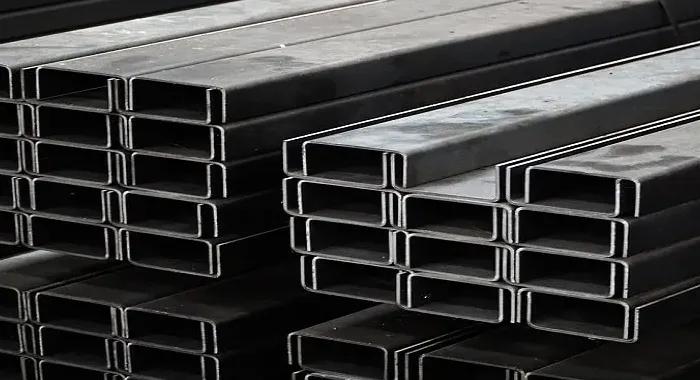
A profile, as one of the most widely used steel sections, plays a very important role in construction, industry, and metal decoration. From door and window frames to light structure columns and even the construction of sheds and sign bases, the profile is always prominently present. For this reason, knowing its types, being aware of the technical characteristics of each type, and making the right choice according to the project’s needs is very essential to prevent capital loss.
Many buyers, when buying a profile, only pay attention to the appearance or price, while the difference between open and closed profiles, sheet thickness, production method, and factory brand have a direct impact on strength, weldability quality, and durability of the structure. In this article, we will examine all the important points of buying profiles in an analytical and practical way so that you can make a reliable, economical, and accurate choice.
What is a profile and in which industries is it used?
In simple terms, a profile refers to hollow or open steel sections that are produced by shaping steel sheet through cold or hot rolling. These products usually have a constant cross-section along their length, such as square, rectangular, or circular, and are used in various industries depending on the type of application and sheet thickness.
In the construction industry, the highest consumption of profiles is in the manufacture of doors and windows, light metal skeletons, railings, sign bases, scaffolding, and metal frames. But in industrial fields, profiles play a key role in the production of machinery, car chassis, containers, and heavy metal structures.
The important point is that although they have a simple appearance, a small difference in alloy or thickness can completely change the mechanical behavior and useful life of the structure. This issue makes the conscious purchase of profiles very important.
Types of steel profiles in terms of shape and structure
Open profile
Open profiles, as their name suggests, are sections whose cross-section is not completely closed. Among the most common types, we can mention I-beams, channels, angles, strips, and Z-sections. These types of profiles usually have high bending resistance and are used for parts of the structure that require access from one side or connection to other parts.
The open profile plays an essential role in the construction of many civil and industrial structures such as bridge piers, metal frames, light structures, and even the automotive industry. Its advantage is ease of cutting, welding, and assembly. But on the other hand, in parts that are exposed to moisture or corrosive agents, it must be well coated to prevent rust.
Closed profile
A closed (or box) profile has a closed cross-section that is usually produced in the shape of a square, rectangle, or circle. One of the most important features of this type is its high resistance to torsion and impact. The square and rectangular profile, which is produced by cold rolling or welding steel sheet, is very popular in the construction of light metal structures such as doors and windows, railings, and light industrial skeletons due to its geometric stability.
Circular profiles, also known in the market as steel pipes, are widely used in the gas, water, and utility industries. Due to the closed cross-section, their resistance to internal pressure is very high.
Compared to an open profile, using a closed profile in parts where appearance matters (such as railings and metal doors) creates a more beautiful and cleaner look.
Classification of profiles by production method
Hot-rolled profile
This type is made using thick steel sheet and through a hot rolling process. In this method, the sheet is shaped at a high temperature (about 1100 degrees) and finally converted into the desired section by industrial rollers. The result is a profile with high strength and a relatively rough surface.
Hot-rolled profiles are used for heavy structures such as large metal skeletons, sheds, and industrial columns. Its high thickness and high strength create exceptional durability against bending and impact, but on the other hand, it has more weight and higher transport costs.
Cold-rolled profile
Unlike the previous type, cold-rolled profiles are made at ambient temperature from thinner steel sheets. In this method, the sheet is formed cold after passing through rollers without heating. The result is a smooth surface, more precise edges, and more regular dimensions.
Cold-rolled profiles have lower strength than the hot-rolled type, but due to their lower weight, clean appearance, and precise dimensions, they are a very good choice for light construction, decorative, and delicate industrial applications.
Common types of profiles in the Iranian market
Structural profile
Structural profiles are used for constructing the skeleton of various buildings and sheds. This type is usually square or rectangular and is made of ST37 steel. Common thicknesses are between 2 and 4 mm. Choosing the correct thickness according to the load on each member plays a fundamental role in the durability and safety of the structure.
Door and window profile
Door and window profiles are one of the most used types, usually made of steel sheet with a thickness of 2 to 2.5 mm. It is designed in such a way that it can accommodate locks, hinges, and handles. In the production of door and window profiles, surface precision, weld quality, and edge uniformity are very important.
Although aluminum and UPVC are serious competitors today, steel profiles still have an advantage due to their reasonable price and high durability in industrial or high-traffic environments.
Furniture profile (light)
Furniture profiles are made of thinner sheet and softer steel and have high flexibility. This type of profile is used to make tables, chairs, office furniture, hospital equipment, and bicycle frames. Light weight and shiny surface are its prominent features.
For the production of delicate products, choosing a furniture profile with low thickness tolerance is very important so that it does not crack during the bending or punching process.
How to check the quality of a profile before buying
One of the most important concerns of buyers is distinguishing a quality profile from poor samples. A standard profile must have a smooth surface without waves or bubbles. Weld lines (especially in closed sections) must be uniform, and no cracks or holes should be visible.
The actual weight of the profile must also match the Stahl table and the specifications of the manufacturing factory. Profiles lighter than standard are usually made of thinner sheets or with a weaker chemical composition, which have less resistance to mechanical load and impact.
Checking the manufacturer’s brand is also very important. Famous brands such as Yazd Profile, Saveh, Kian Kashan, Jahan, and Asia Foolad are known in the Iranian market for their high quality and compliance with the Iranian national standard.
Important tips for buying profiles for construction and industrial projects
When buying a profile, you should pay attention to several basic factors:
Accurate dimensions and thickness: should be chosen according to structural calculations and application.
Standard and manufacturer’s brand: preferably use reputable manufacturers.
Type of coating and storage: in humid or industrial environments, choose galvanized or anti-rust profiles.
Check the daily market price: the price of profiles is affected by billet prices, energy costs, and exchange rates. Always inquire from several reliable sources.
In large projects, it is recommended to buy directly from the factory or an official representative instead of the open market to benefit from authenticity, accurate weight, and transport services.
Tips for storing and transporting profiles
Due to their special shape, profiles must be stored in appropriate conditions to avoid twisting or deformation. It is better to keep them in a dry environment, without direct contact with the ground, and with proper ventilation. The use of wooden pallets and thick nylon covering prevents direct contact with moisture.
For transportation, fabric or galvanized straps should be used to tie the bundles so that the profiles do not separate. Severe impact or throwing of packages during loading may cause bending or damage to the edges, which will cause problems during assembly.
Conclusion
The profile is an inseparable part of the construction and metalworking industry. The wide variety in cross-section type, production method, thickness, and alloy means that each project requires its own specific choice. Knowing the difference between open and closed profiles, hot and cold rolling, and reputable brands in the market helps the buyer make an informed decision.
When buying a profile, you should think beyond the price and pay special attention to quality, actual weight, standard, and how to store it. Using quality products not only guarantees the safety and durability of the structure but also prevents future repair and replacement costs.